
Read the work before you hire me.
Most people have never hired a preconstruction consultant, so they don't know what they're actually paying for until it shows up in the inbox. That's a bad way to spend five figures.
So here's the work. Two complete deliverables, both downloadable, both built on a real public project so nothing is hidden behind a client's confidentiality. No summaries of what I'd do — the actual documents, front to back.
Read them before you call me. If they don't tell you something you didn't already know, don't call.
Sample 1 — Go/No-Go Bid Review
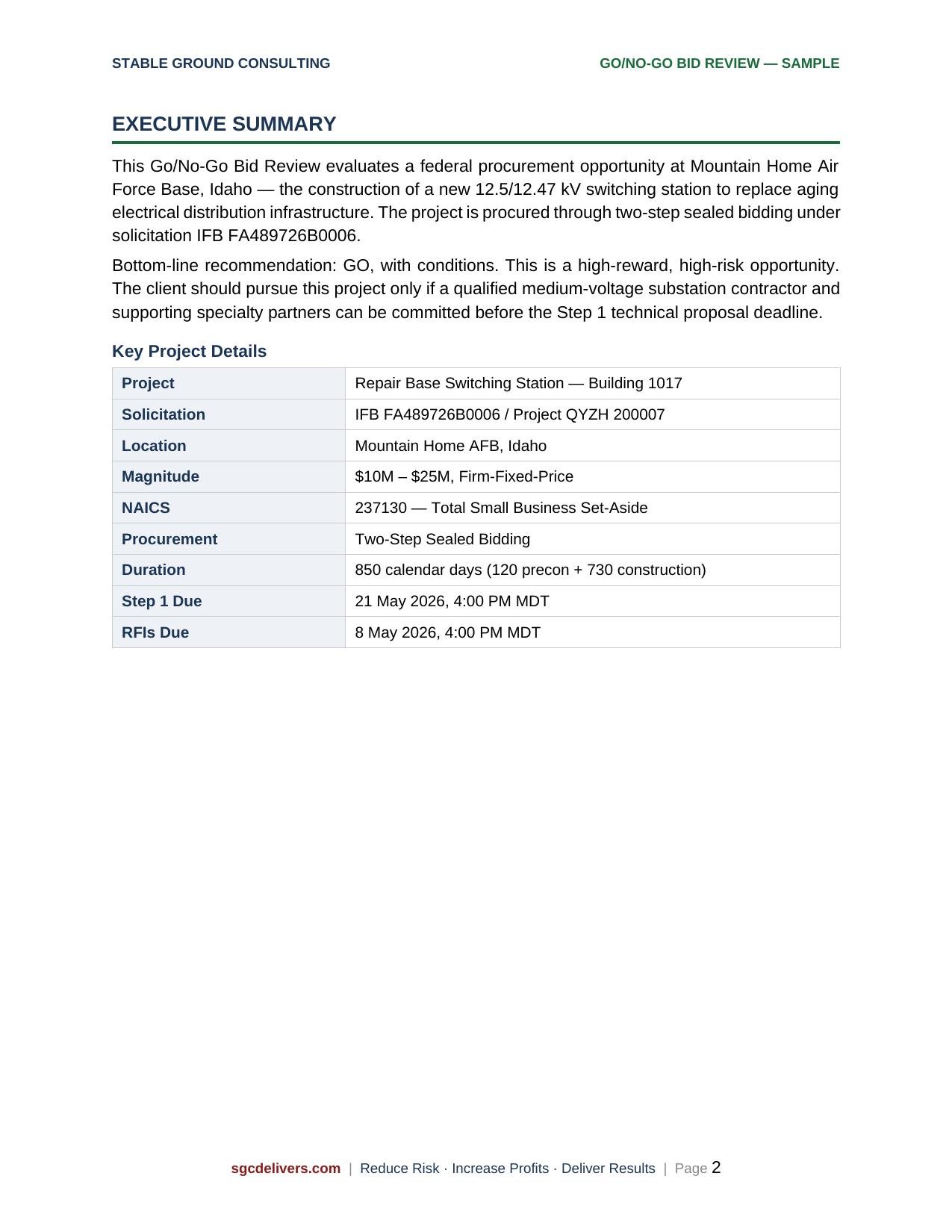
The project. A new 12.5 kV switching station at Mountain Home Air Force Base, Idaho, replacing aging electrical infrastructure. Firm-fixed-price, $10M–$25M, procured through two-step sealed bidding.
Why this one. Everything in it came from the public federal solicitation, which means I can show you the whole review without redacting a client out of it. What you're reading is the actual analysis — the scope breakdown, the risk register, the fit assessment, and the recommendation — on a real opportunity a contractor could have chased.
What's in it:
Executive summary with the recommendation up front
Scope breakdown and core work categories
The requirements that determine technical acceptability — miss one and the bid is dead regardless of price
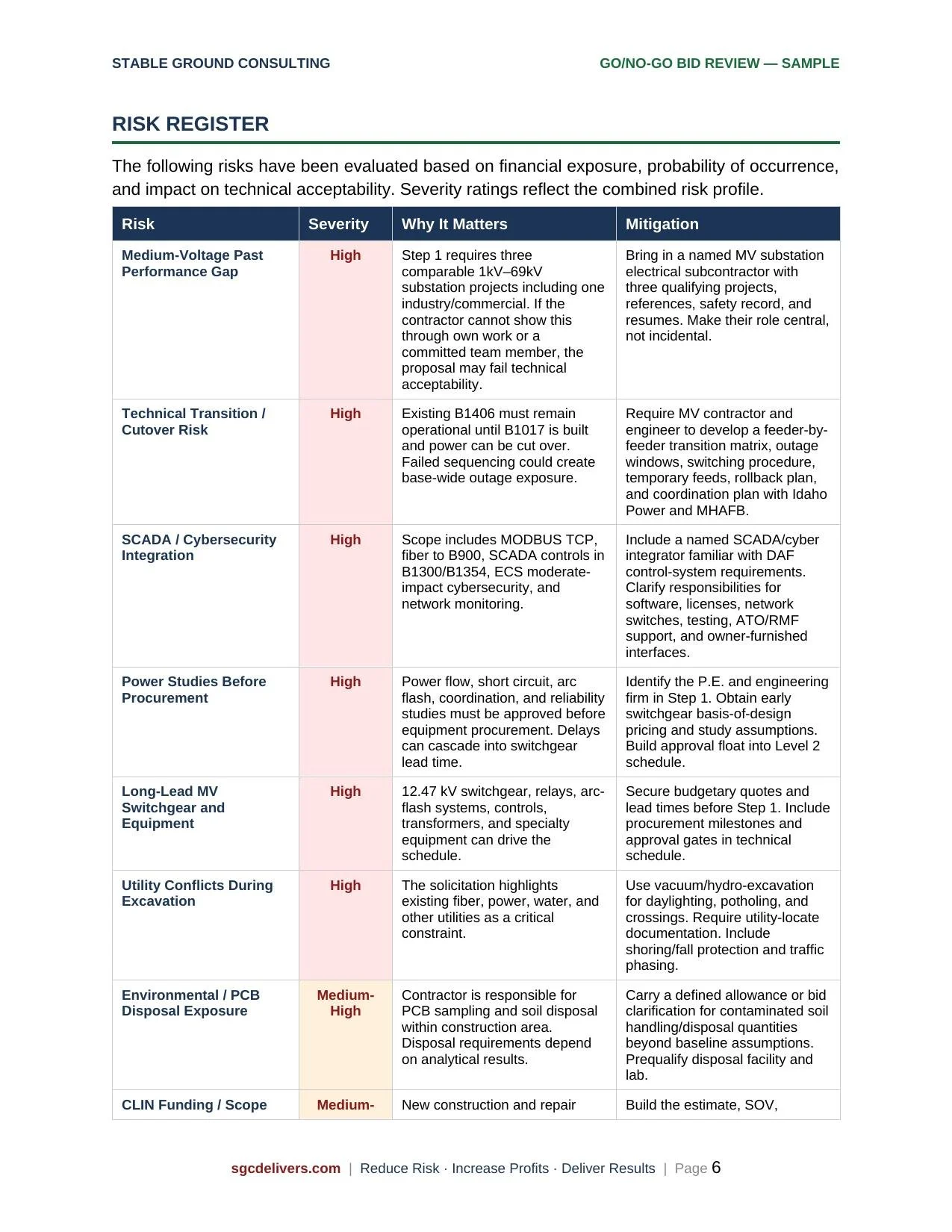
A risk register with severity ratings and a specific mitigation for each item
Reward profile and strategic value
Fit assessment — where it's a strong fit, where it's conditional, and where you'd need a teaming partner
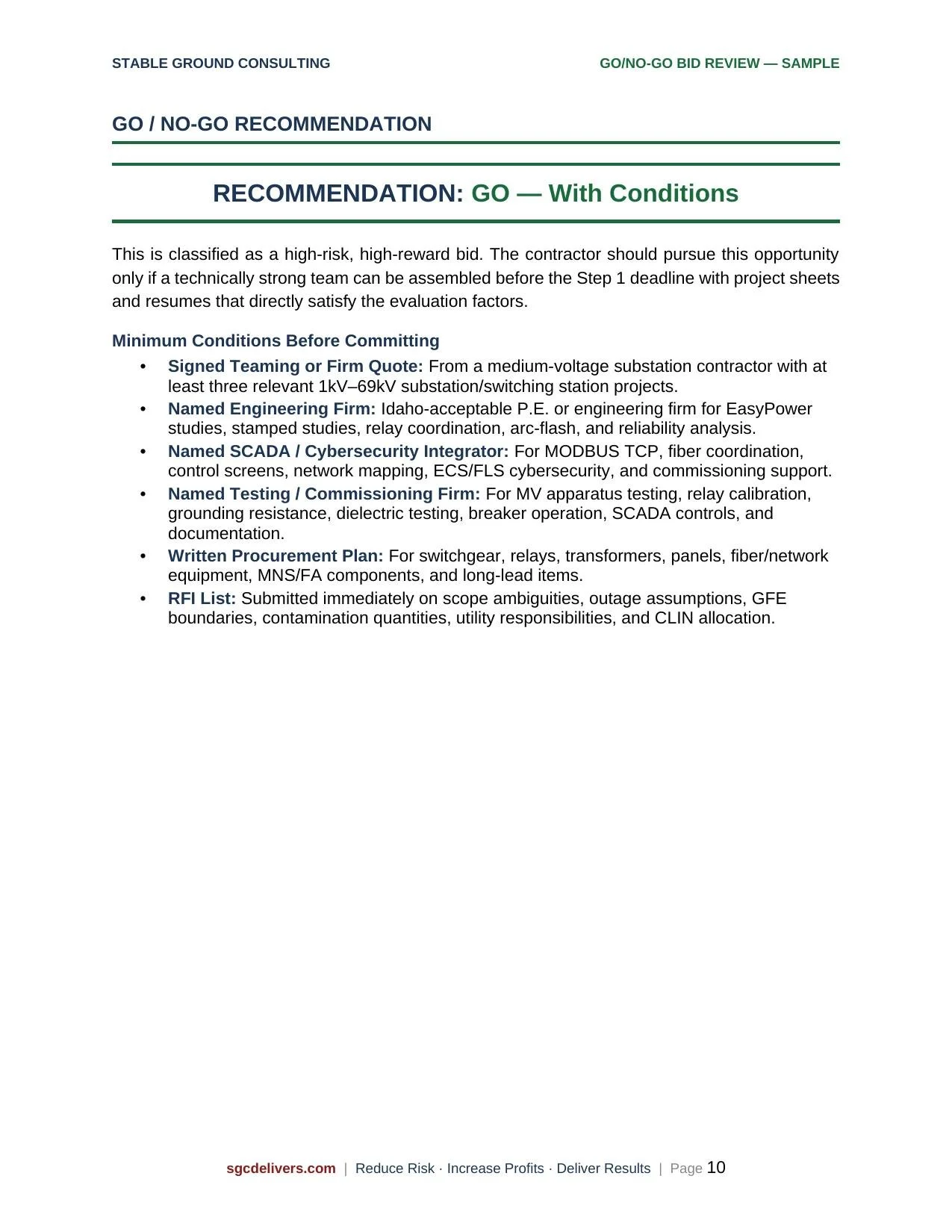
The go/no-go recommendation, with the exact conditions to meet before committing
Ten RFIs to submit before pricing
The bottom line. By the end of it you know whether to chase the job, walk away, or pursue it with conditions — before the estimating team spends an hour. Read the fit assessment and the RFI list first. Those two sections are where twenty-five years shows up.
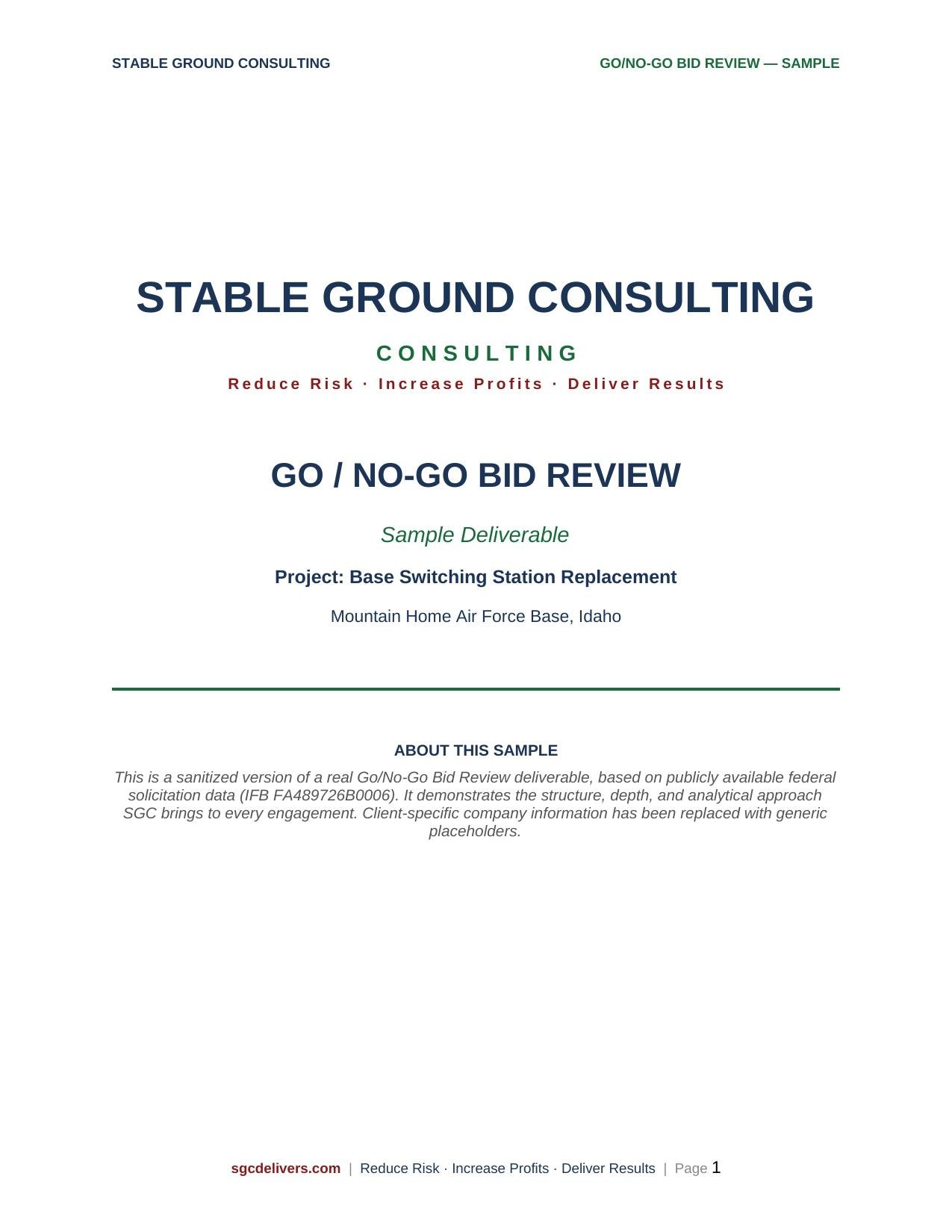
Preview — Sample Go/No-Go Bid Review (12 pages)
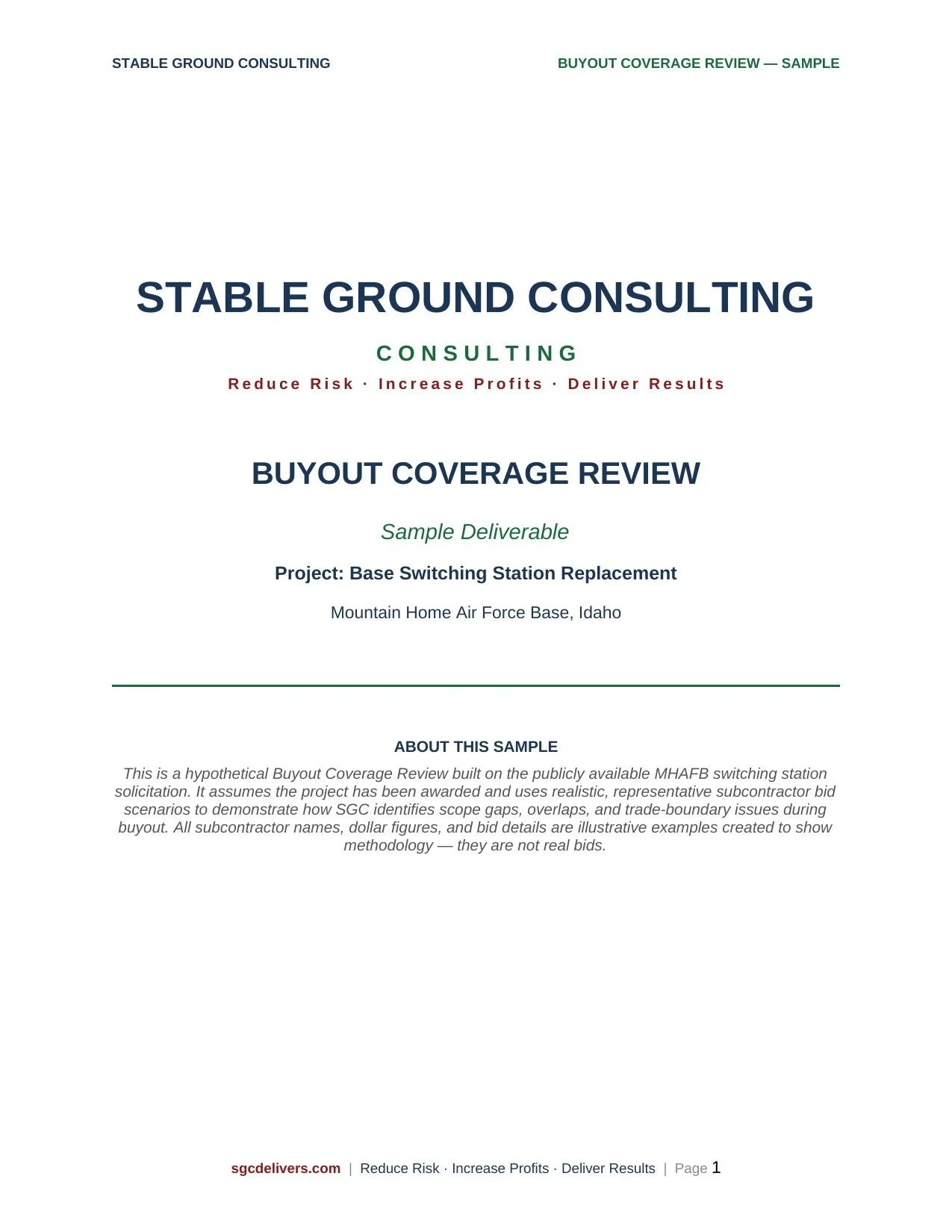
Sample 2 — Buyout Coverage Review
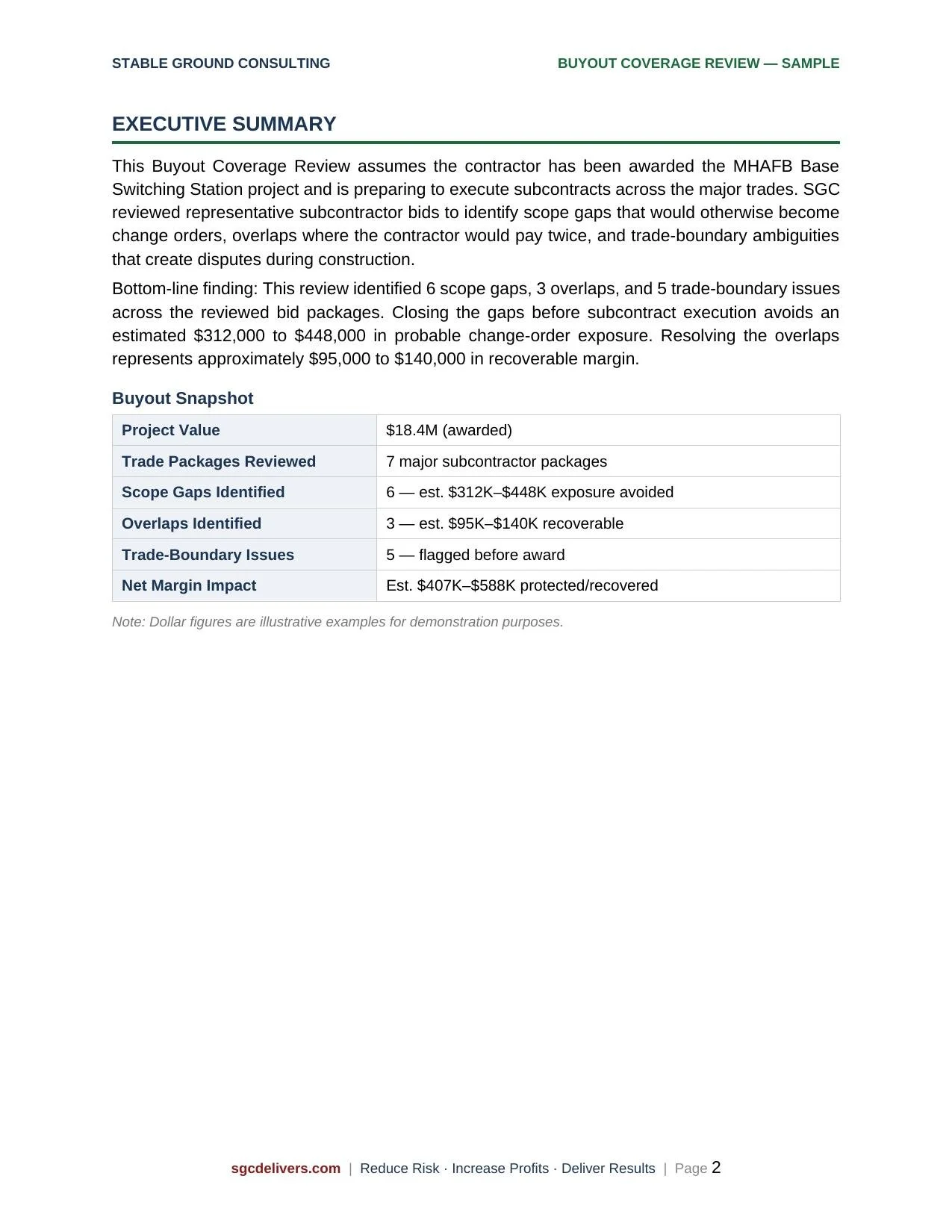
The project. Same Mountain Home switching station, but assume you won it. An $18.4M award heading into buyout, with subcontractor bids in hand across all seven major trade packages.
Why this one, and what it is. The solicitation is real and public. The subcontractor bids are not — I built them, because no contractor is going to hand me their buyout package to publish. So the names and dollar figures are constructed.
I'd rather tell you that than let you assume otherwise. What's real is the method: how the packages get read, where the gaps turn up, and what gets done about them. The gaps in this sample are the ones I've actually found on real jobs.
What's in it:
Executive summary with the margin impact at a glance
Every subcontractor package reviewed, across every trade
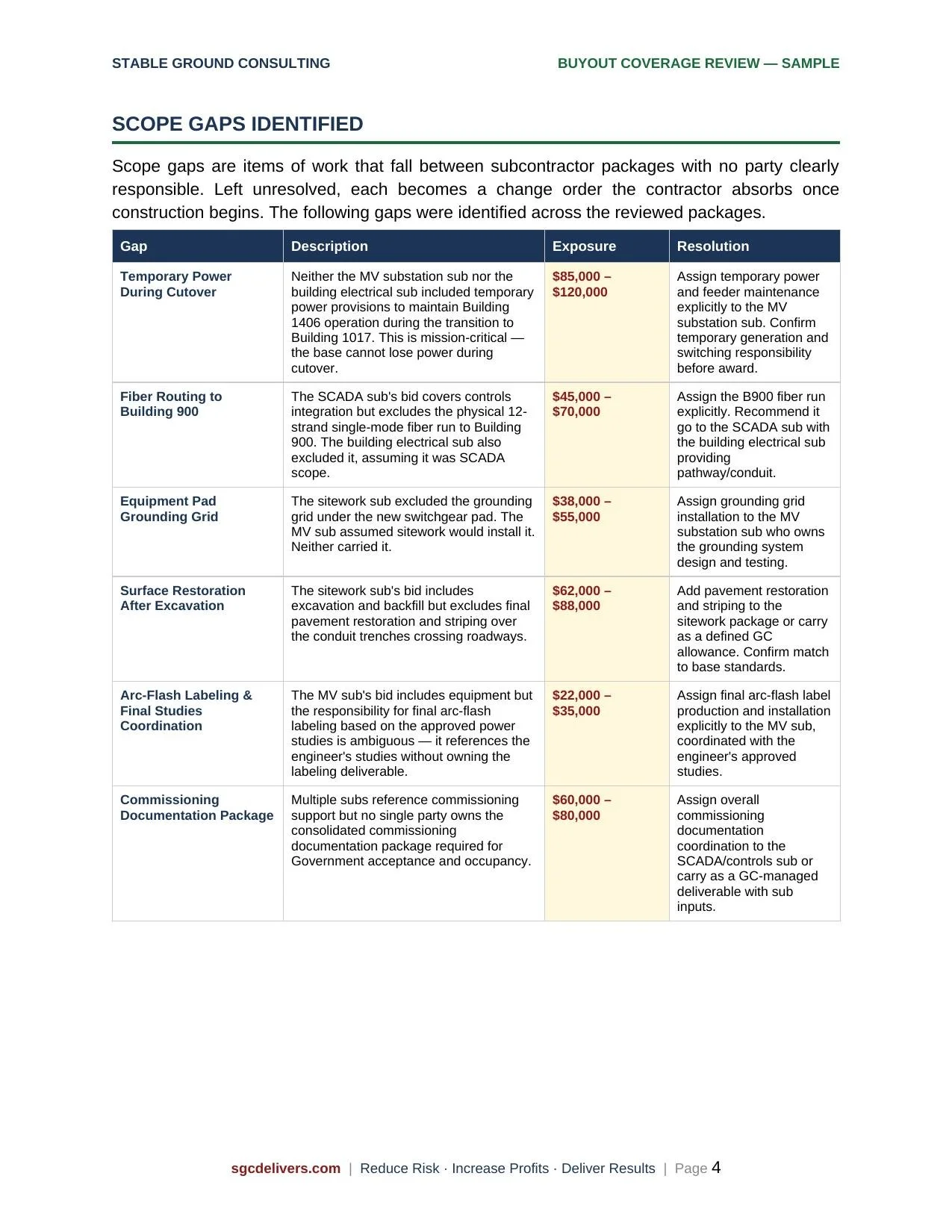
Scope gaps — work no one is carrying, which becomes a change order the day someone notices
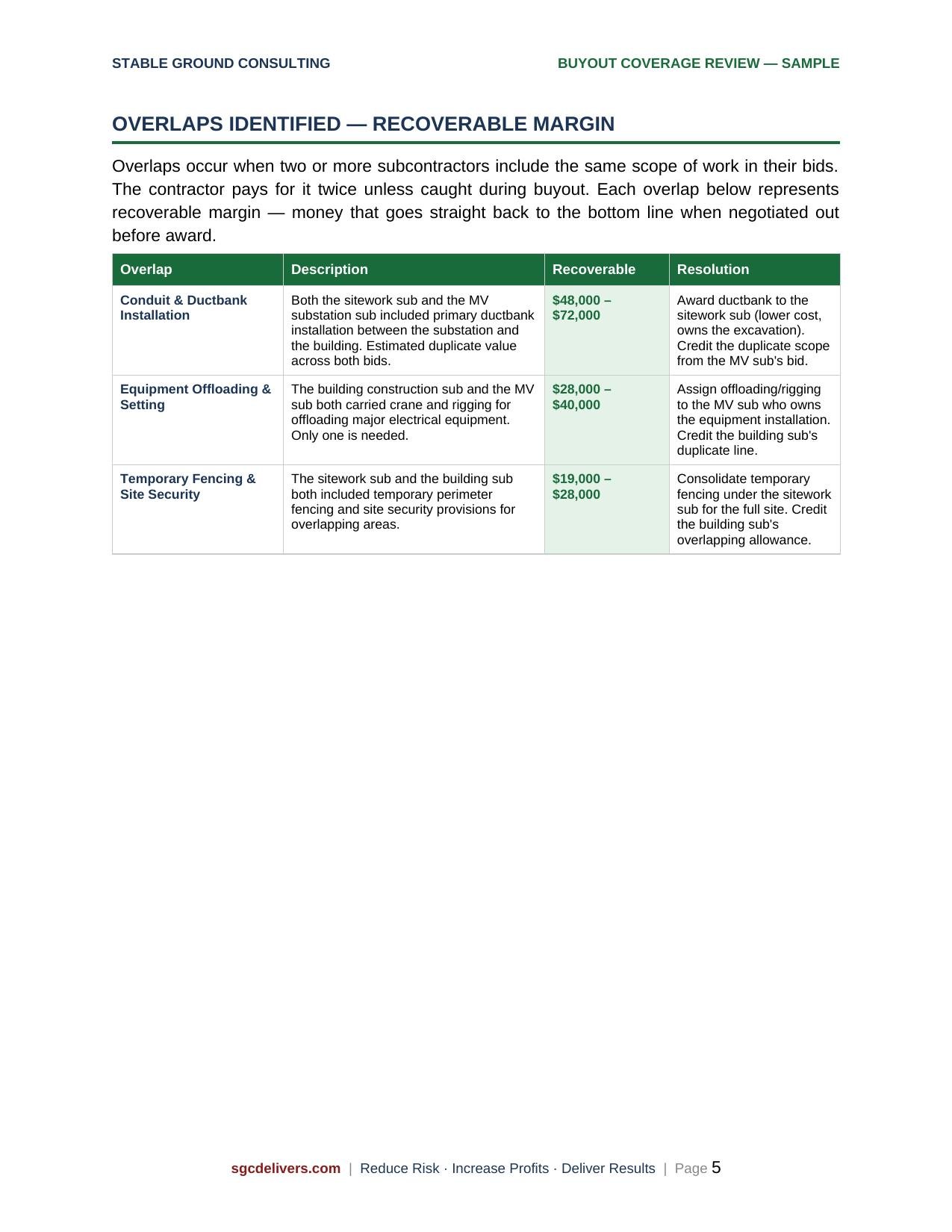
Overlaps — work two subs are both carrying, which you'd otherwise buy twice
Trade-boundary analysis, so the argument happens now instead of in month nine
A specific resolution for each gap and each overlap
Consolidated findings table
The bottom line. Six gaps and three overlaps on a job that seven experienced trade contractors had already priced. That's the point of the sample — not the dollar figures, which are mine, but where the holes were and why nobody caught them.
None of them are exotic. They're the ordinary items that sit between two trades and look small enough that nobody argues about them during buyout.
Buyout is the one moment in a job where margin can still move up. This is what it looks like to work it on purpose.
Preview — Sample Buyout Coverage Review (7 pages)